

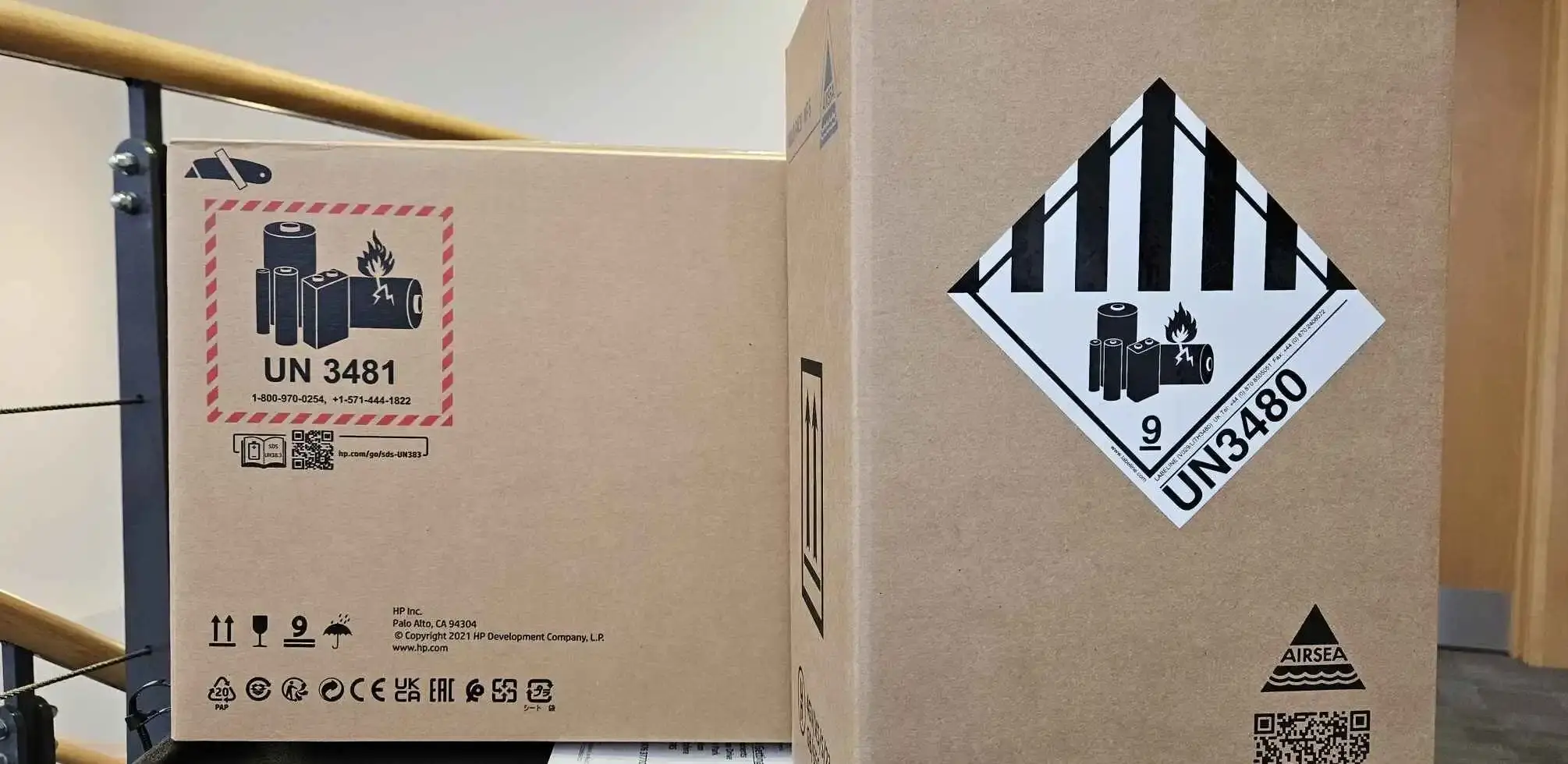


Shipping mobile phones with lithium batteries has traditionally been relatively straightforward, thanks to exceptions within the dangerous goods regulations. However, new battery technology could challenge how those exceptions are applied.
Millions of smartphones are shipped around the world every day. There are the new phones alongside an ever-growing second-hand market, set to outpace the new phone market.
To date, most mobile phones have been powered by single lithium ion cells of less than 20 watt hours, and devices such as tablets which require more power have been powered by batteries of less than 100 watt hours.
Why Are Watt Hours Important for Shipping Lithium Batteries?
For lithium ion cells rated at no more than 20 watt hours, and batteries rated at no more than 100 watt hours, certain regulatory exceptions are available. These include Special Provision 188 under ADR and the IMDG Code, and Section II of Packing Instruction 967 under the IATA Dangerous Goods Regulations for batteries contained in equipment.
Small batteries installed in equipment has meant simpler shipping, and ensured single lithium ion battery or cell powered phones can move with relative ease between sellers and shoppers.
Once a lithium ion cell exceeds 20 watt hours, or a lithium ion battery exceeds 100 watt hours, these exceptions are no longer available, even if the cell or battery is installed inside a device. This introduces additional requirements for packaging, marking, labelling and documentation, depending on the mode of transport.
For manufacturers and retailers shipping millions of devices worldwide, the difference between a battery rated at 101 watt hours and one rated at 99 watt hours can therefore have significant practical and commercial implications.
The Apple iPhone 18 Pro Max
Today there is a new phone on the market containing a cell of more than 20 watt hours when fully operational, the Apple iPhone 18 Pro Max. By using the single cell, section II of packing instruction 967, and special provision 188 in theory shouldn’t apply.
But Apple has got round that by creating firmware which limits the capacity of the battery to beneath 20 watt hours when a prepare to ship mode is enabled.
This raises an interesting distinction between the physical energy capacity of a lithium cell and the energy that can be accessed when electronically restricted. Can electronically restricted energy capacity determine a battery’s declared watt-hour rating?
Can software really change a battery’s watt-hour rating?
In the USA, the regulator, the Pipeline and Hazardous Materials Safety Administration (PHMSA) ruled in February 2025 that a lithium ion battery or cell which uses firmware to limit its nominal energy “can be considered a smaller lithium ion cell or battery for transportation.”
There is an argument circulating among others in regulatory positions that the 20 watt hour limit for a cell is too low, and this should be raised, but that doesn’t necessarily answer the question as to whether software can change how shippers move a battery.
Other regulators have talked about the importance of following the regulations and they see watt hour ratings as a physical battery property. There is though an issue around enforcement and proving firmware has in fact limited a specific battery’s capacity.
It is widely accepted that Apple’s approach is safe and arguments that the 20 watt hour limit should be increased are common. The question is broader; how will regulators respond to others using similar technology to limit battery capacity?
Why does this matter for dangerous goods transport?
Dangerous goods regulations are designed to establish consistent safety standards across different transport modes and countries. The regulations we all use around the world come from the same source, the UN Recommendations on the Transport of Dangerous Goods – Model Regulations (also known as the Orange Book), however, individual states enshrine regulations in law and can introduce their own interpretations and derogations. If different regulatory authorities interpret watt-hour ratings differently, this could create challenges for businesses shipping products internationally.
How will it work if a product qualifies for certain exceptions under one country’s interpretation but not under another? This presents potential challenges for manufacturers, shippers, freight forwarders and carriers.
A bigger question for the industry
The iPhone 18 Pro Max raises an interesting question for the dangerous goods industry. As battery technology continues to evolve, should the way we determine a battery’s energy rating evolve with it?
Technology is moving quickly, and dangerous goods regulations must continue to balance innovation with safety.
What seems like a relatively small change to the classification of a smartphone battery could have much wider implications for the transport of lithium batteries.
There are several changes to the shipping of lithium batteries coming in 2027 across ADR, IMDG and IATA/ ICAO regulations. To keep shippers and carriers up to date with what matters to them, we are running 2027 update seminars. These sessions will run online and in person throughout late October, November and December, with a dedicated section of each session focused on lithium batteries.
Find out more information on our website here.
Want to know more about DG Regulation Changes?